Best Endless Runner Games
A guide to the best endless runner games, explaining how continuous movement, evolving worlds, and skill-based runs create fast, flexible gameplay for players of all ages.
Read more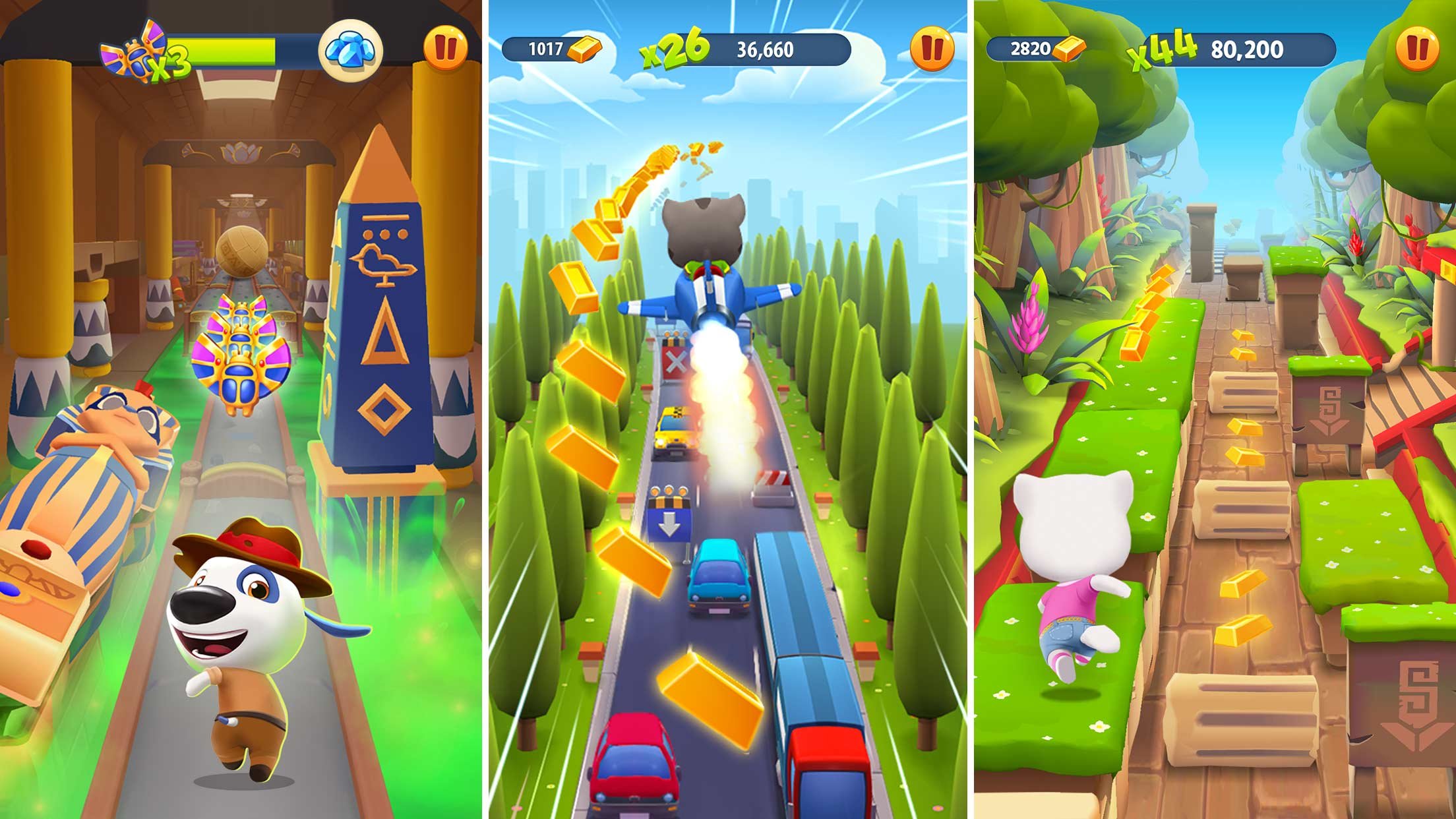
Few mobile game formats have remained as consistently recognizable as endless runners. The core structure is simple, continuous forward movement, reactive interaction, and instant restarts, yet the experience continues to attract players across different ages and skill levels.
The reason isn’t novelty. It’s adaptability. Endless runners create a gameplay rhythm that works equally well for quick sessions or extended play, allowing both new and experienced players to engage on their own terms.
Why are endless runners still popular?
Endless runners remain popular because they combine instant accessibility with scalable difficulty, allowing players of different ages and skill levels to engage in both short and long sessions.
Are endless runners suitable for all ages?
Yes. Their simple controls make them approachable for younger or casual players, while increasing speed and complexity provide challenge for more experienced players.
Can endless runners be played in short sessions?
Endless runners are designed for flexible session lengths, where a single run can last seconds or extend into longer play depending on player skill and focus.
Endless runners begin in motion. There’s no setup, no complex onboarding, and no need to learn layered systems before playing. This makes them accessible to younger players and those looking for low-friction interaction.
At the same time, the simplicity doesn’t limit depth. As speed increases and obstacle patterns become more demanding, the same system begins to challenge timing, focus, and reaction speed.
The result: A structure that works for beginners and scales naturally with experience.
One of the defining strengths of endless runners is how they support variable session length.
A short run can last just a few seconds
A focused session can extend into long, uninterrupted play
Each run feels complete on its own, but also contributes to long-term improvement. Players can stop at any moment without losing progress, or continue as long as their performance allows.
This flexibility is what allows endless runners to fit into everyday life while still supporting deeper engagement.
Repetition is central to the genre, but it doesn’t feel static. Obstacle sequences shift, environments evolve, and pacing adjusts as the run progresses.
For newer players, repetition builds familiarity.
For experienced players, it becomes a test of consistency and precision.
This creates a layered experience where:
early runs feel approachable
later runs reward mastery
Endless runners remove the expectation of completion. Instead of finishing levels, players improve through:
longer distances
better timing
more efficient reactions
Progress becomes experiential rather than linear. The game doesn’t “end,” but the player’s ability evolves.
This makes the format sustainable across different play styles and time investments.
Endless runners naturally fit into fragmented moments:
waiting
commuting
short breaks
Because runs restart instantly and require no setup, players can enter and exit the experience without friction.
At the same time, nothing prevents longer sessions. A quick run can turn into extended play without changing the structure of the game.
Endless runners are closely tied to the concept of flow, a state where movement, timing, and reaction align into continuous focus.
New players experience flow through simple interaction
Experienced players reach it through speed and precision
Because the system scales without becoming complex, players can return repeatedly and re-enter that state regardless of skill level.
Runner experiences like Talking Tom Gold Run show how this structure can evolve while remaining accessible.
The game maintains a clear chase loop; forward motion, obstacles, rewards: while layering:
new environments
visual variation
progression systems
This allows:
players of all ages to enjoy short, reactive runs
experienced players to sustain longer sessions and improve performance over time
The same loop supports different play styles without needing to change its core design.
Endless runners stay popular because they balance simplicity with adaptability.
They start instantly
They scale with skill
They support both short and long sessions
They remain accessible across age groups
As mobile play continues to prioritise flexibility, the genre remains relevant, offering experiences that don’t require commitment, but still reward it.
The appeal isn’t reaching the end.
It’s the ability to keep going, at your own pace, and at your own level.
A guide to the best endless runner games, explaining how continuous movement, evolving worlds, and skill-based runs create fast, flexible gameplay for players of all ages.
Read more
Quick action, responsive movement, and chase gameplay define experiences like Talking Tom Gold Run, where short runs can grow into longer sessions with skill. Why this works:
Read more
A guide explaining why endless runner games feel satisfying, from instant movement and quick runs to longer skill-based runs that evolve as players improve timing and pattern recognition.
Read more